Buying guide

The Best French Press Coffee Makers

Four French presses (cafetières, coffee plungers) for rich, full-bodied coffee, from a classic glass Bodum to insulated steel presses that keep coffee hot.

By the Kettle & Crema team · Updated November 17, 2026 · How we research

Quick picks

Best overall

Bodum Chambord French Press (8 cup)

A classic, repairable French press that brews four rich mugs at a time.

Check price on Amazon.com
Cleanest cup

Espro P7 French Press

French press lovers who hate grit and want the coffee to stay hot.

Check price on Amazon.com
Best insulated

Fellow Clara French Press

Long, slow breakfasts: the best heat retention and the easiest clean-out.

Check price on Amazon.com
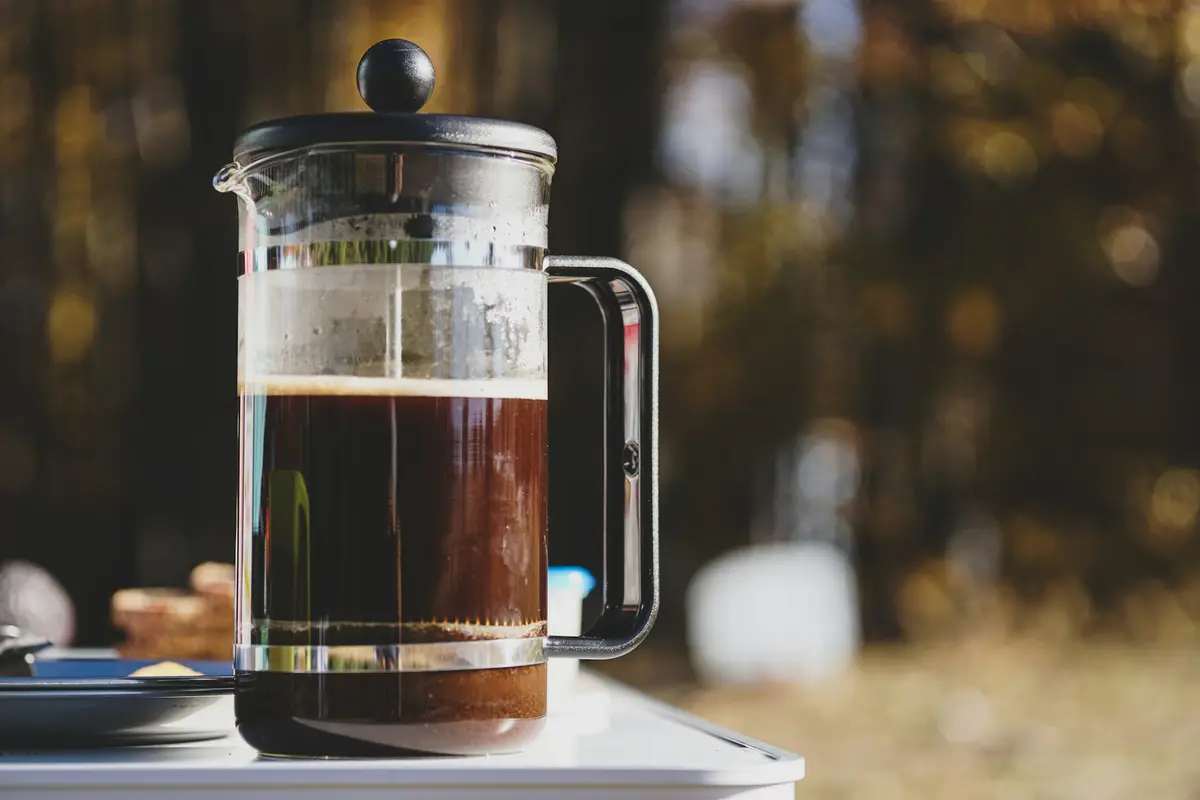
A glass French press of coffee on a table

Kettle & Crema is reader-supported. As an Amazon Associate I earn from qualifying purchases. It costs you nothing extra. How this works.

The French press, known as a cafetière in the UK and a coffee plunger in Australia, is the simplest way to make full-bodied, flavourful coffee. Coffee steeps in hot water for four minutes and a mesh filter separates the grounds. There is no paper filter, so the oils that give coffee its body stay in the cup.

The differences between presses come down to three things: how much sediment gets through, how long the coffee stays hot, and how easily the glass survives daily life. These four cover every budget.

Who this guide is for

Anyone who wants rich, full-bodied coffee for one to four people with almost no equipment or skill.

Our picks at a glance

PickProductPrice tier
Best overallBodum Chambord French Press (8 cup)Mid-range
Cleanest cupEspro P7 French PressPremium
Best insulatedFellow Clara French PressPremium
Best budgetBodum Brazil French Press (8 cup)Budget

How we picked, and why you can trust it

  • A filter that keeps grit out of the cup.
  • Replaceable glass or a durable body, with spares available.
  • A clear reason to choose each: classic, cleanest cup, insulated or cheapest.

We compare manufacturers’ published specifications, warranty and spare-part support, independent certifications where they exist, and the problems that come up again and again in owner reviews. Every pick states who should skip it.

No brand pays for a place here and we accept no free products. We earn a commission if you buy through our links, which never changes the price you pay. How we research

The picks in detail

Best overall

Bodum Chambord French Press (8 cup)

Bodum · Mid-range

The French press most people picture, and still the benchmark after decades on sale. Heat-resistant borosilicate glass in a steel frame, a steel mesh filter and a one-litre capacity that brews four mugs. It makes the rich, full-bodied coffee a press is loved for, and every part can be replaced.

Capacity
1 L / 34 oz, about 4 mugs
Beaker
Borosilicate glass
Frame
Stainless steel
Filter
Stainless steel mesh

What we like

  • Classic design that lasts
  • Spare beakers and filters easy to find
  • Rich, full-bodied coffee

What to know

  • Glass can break
  • Some sediment in the last mouthful
  • Loses heat quickly
Check price on Amazon.com
Cleanest cup

Espro P7 French Press

Espro · Premium

The press for people who dislike grit. Two fine filters, one inside the other, catch far more sediment than a standard mesh, and the double-walled steel body keeps coffee hot. Espro says the filter also seals off the grounds once pressed, so the coffee stops extracting and the last cup is less bitter.

Sizes
18 oz and 32 oz
Filter
Double micro-filter
Body
Double-wall stainless steel
Care
Dishwasher safe

What we like

  • Much cleaner cup than a standard press
  • Keeps coffee hot
  • Last cup stays smoother, according to Espro

What to know

  • Several times the price of a Chambord
  • Fine filters need a good rinse
  • Usable volume is less than the headline size
Check price on Amazon.com
Best insulated

Fellow Clara French Press

Fellow · Premium

A vacuum-insulated steel press that keeps coffee hot through a long breakfast, with a non-stick interior that makes emptying the grounds easy. Its finer mesh gives a cleaner cup than a basic press, and it looks good enough to bring to the table.

Capacity
24 oz / about 700 ml
Body
Double-wall vacuum-insulated stainless steel
Interior
Non-stick coating
Filter
Enhanced fine mesh

What we like

  • Best heat retention here
  • Easy to clean out
  • Handsome table piece

What to know

  • Smaller than an 8-cup glass press
  • Expensive
  • Non-stick coating needs gentle care
Check price on Amazon.com
Best budget

Bodum Brazil French Press (8 cup)

Bodum · Budget

The same glass and steel filter as the Chambord in a plastic frame, for a fraction of the price. It is the obvious first French press, and a sensible one for an office or holiday home where looks matter less.

Capacity
8 cup, about 1 L
Beaker
Borosilicate glass
Frame
Polypropylene
Filter
Stainless steel mesh

What we like

  • Very low price
  • Same brewing as the Chambord
  • Light and easy to handle

What to know

  • Plastic frame looks cheaper
  • Glass can break
  • Loses heat quickly
Check price on Amazon.com

What we looked at and passed over

Double-wall stainless presses

They keep coffee hot for longer but cost several times more than a classic glass press. The Fellow Clara covers the insulated option here.

How to choose

Glass or steel

Glass lets you watch the brew and is cheaper, but it breaks and loses heat quickly. Double-walled steel keeps coffee hot for much longer and survives knocks, at a higher price.

Filtration

A standard single mesh lets fine particles through, which gives body but leaves sludge in the last mouthful. Double and finer filters give a cleaner cup. Grinding coarse matters more than the filter, though.

Size in real mugs

Press sizes are given in small four-ounce cups. An “8 cup” press makes about a litre, roughly four mugs. Buy for the number of mugs you actually pour.

Pour it all out

Coffee left on the grounds keeps extracting and turns bitter. Decant what you will not drink straight away, or choose a press that seals off the grounds.

Frequently asked questions

What grind should I use for a French press?

Coarse, like sea salt flakes. Fine grounds clog the mesh, make pressing hard and add bitterness and sludge.

How much coffee for a French press?

About 1 g of coffee to 15 g of water: 30 g of coffee for 450 ml, or 60 g for a full one-litre press. Steep four minutes, stir the crust, then press slowly.

Is a cafetière the same as a French press?

Yes. It is called a French press in North America, a cafetière in the UK and a coffee plunger in Australia and New Zealand.

Why is my French press coffee bitter?

Usually a grind that is too fine, water that is boiling hard, steeping too long, or leaving the coffee sitting on the grounds after pressing.

Before you buy: learn more

Still deciding? Head-to-head